
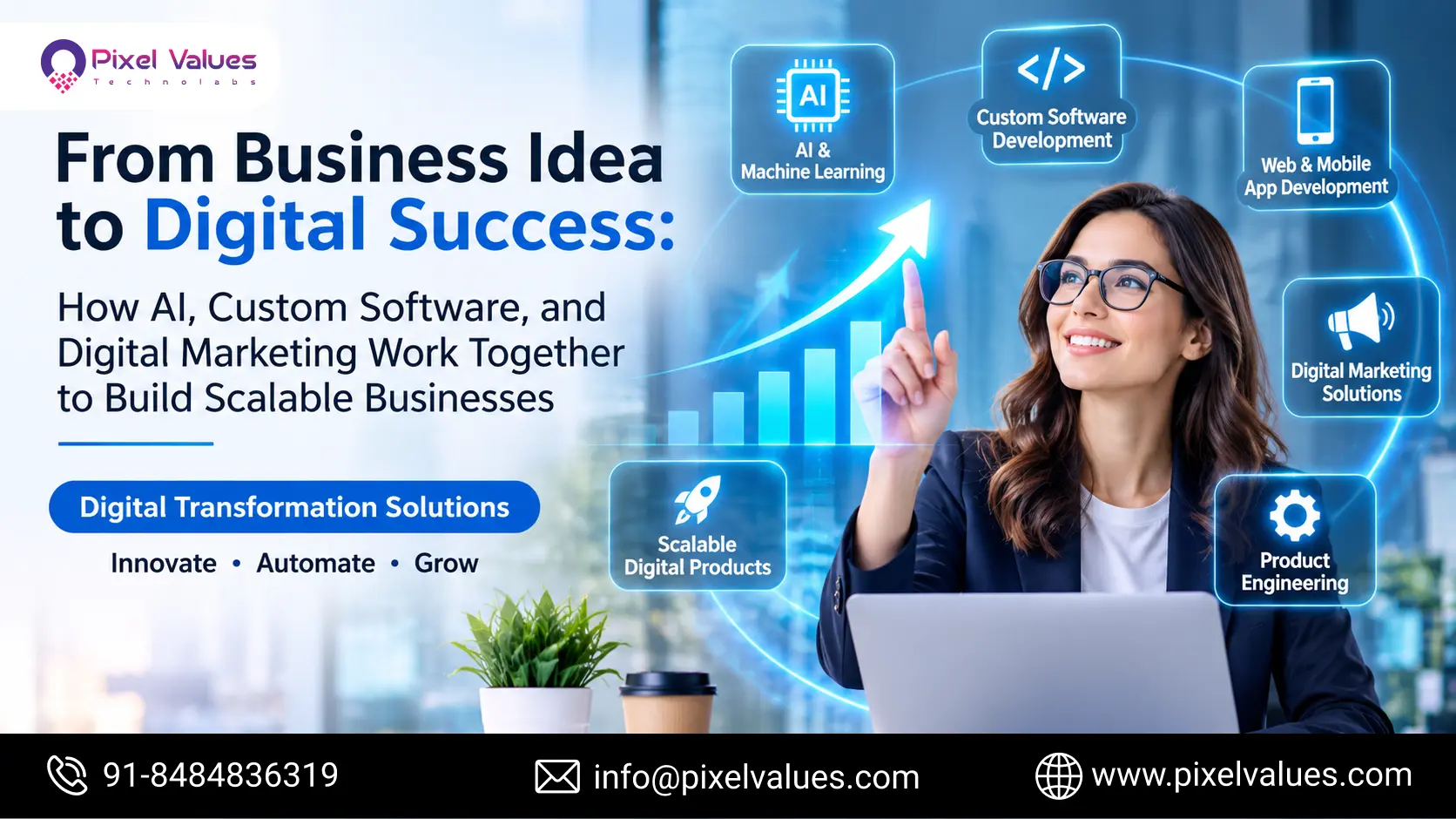
From Business Idea to Digital Success: How AI, Custom Software, and Digital Marketing Work Together to Build Scalable Businesses Every successful business starts with an idea. But turning that idea into something people trust, use, and recommend takes much more than a great concept. Businesses need the right technology, a clear strategy, and a better understanding of their customers. This is where Digital Transformation Solutions make a real difference. From using artificial intelligence to simplify everyday tasks to developing customized software and building a strong online presence, digital technology helps businesses work smarter and grow faster. Whether you are launching a startup or looking to improve an established business, the right digital approach can help turn your vision into something meaningful. Why Does Digital Transformation Matter for Modern Businesses? Think about how customers interact with businesses today. They expect quick responses, easy-to-use websites, smooth mobile experiences, and services that understand their needs. Traditional business methods alone may not always be enough to meet these expectations. Digital transformation helps businesses adapt to these changes by bringing modern technology into everyday operations. It can reduce manual work, improve communication, organize business activities, and make important information easier to access. With the right Digital Transformation Solutions, companies can spend less time dealing with repetitive tasks and more time focusing on customer satisfaction, innovation, and business growth. 1. AI and Machine Learning: Helping Businesses Work Smarter Artificial intelligence is no longer just a technology for large companies. Businesses of different sizes are now using AI to save time, understand customers, and improve their services. AI-powered business solutions can handle several everyday activities, making work easier for employees and customers alike. For Example: 1. AI Chatbots: Answer common customer questions and provide support even outside regular business hours. 2. Predictive Analytics: Help businesses understand customer behavior and identify possible future trends. 3. Smart Recommendations: Suggest relevant products or services based on customer interests. 4. Task Automation: Handle repetitive activities so employees can focus on more important responsibilities. When used thoughtfully, AI and machine learning can help businesses make better decisions and create more personalized experiences. 2. Custom Software Development: Technology That Fits Your Business Every business has its own way of working. A solution that works perfectly for one company might not be suitable for another. This is why custom software development is important. Instead of adjusting business processes to fit ready-made software, companies can develop applications according to their actual requirements. For example, a retail business may need an inventory management system, while a service- based company might benefit from a customized customer management platform. Enterprise software development also helps larger organizations connect different departments, manage complex operations, and keep business information organized. The biggest advantage is flexibility. As your business grows, your software can also be updated with new features and capabilities. 3. Web and Mobile App Development: Making Customer Experiences Easier Your website or mobile application is often the first place where potential customers interact with your business. A slow website or confusing application can quickly discourage visitors. Web and mobile app development focuses on creating digital platforms that are attractive, easy to navigate, and useful for customers. A well-designed digital platform should offer: 1. Simple navigation and user-friendly design. 2. Fast loading speed and responsive layouts. 3. Secure payment options and data protection. 4. Convenient access across different devices. 5. Features that can grow as business requirements change. Whether it is an e-commerce application, a business website, or a customer portal, the goal is to make every interaction simple and convenient. 4. Product Engineering: Turning Ideas into Real Products Sometimes, a business idea has great potential, but bringing it to life can feel challenging. Product engineering helps bridge the gap between an idea and a working digital product. The process starts with understanding the problem, researching the target audience, and identifying the features customers actually need. From there, teams work on designing, developing, testing, and launching the product. However, the journey does not end after launch. Customer feedback, regular updates, and performance improvements help keep products useful and competitive. This approach allows businesses to build scalable digital products that can grow alongside their customers and changing market needs. 5. Digital Marketing: Helping the Right People Find Your Business Even the best product or service needs visibility. If potential customers cannot find your business online, it becomes difficult to generate interest and build trust. Digital marketing solutions help businesses reach the right audience through different online channels. Some important strategies include: 1. SEO: Helps your website appear in relevant search engine results. 2. Social Media Marketing: Builds brand awareness and encourages conversations with customers. 3. PPC Advertising: Connects your business with targeted audiences through paid advertisements. 4. Content Marketing: Shares useful blogs, articles, and information that answer customer questions. 5. Email Marketing: Keeps customers informed about updates, offers, and new services. When these strategies work together, businesses can attract visitors, build relationships, and turn potential customers into loyal ones. How Do These Technologies Work Together? The real benefit comes when all these services work as part of one connected strategy. Imagine an online retail business. AI can recommend products based on customer interests, custom software can manage orders and inventory, a mobile application can make shopping easier, and digital marketing can bring new visitors to the platform. Each technology supports the others, creating a smoother experience for both the business and its customers. This is what makes an integrated digital approach valuable. Instead of using separate tools without a clear connection, businesses can build a digital ecosystem that supports their everyday needs and future plans. Conclusion Turning a business idea into long-term success takes planning, the right technology, and a willingness to adapt. Digital Transformation Solutions bring together AI, custom software development, web and mobile applications, product engineering, and digital marketing to help businesses move forward with confidence. These technologies are not just about making operations digital; they are about solving real problems, understanding customers, and creating better ways to work.
Read MoreBLog
How to Build a Website That Ranks on Google and Gets More Customers in 2026
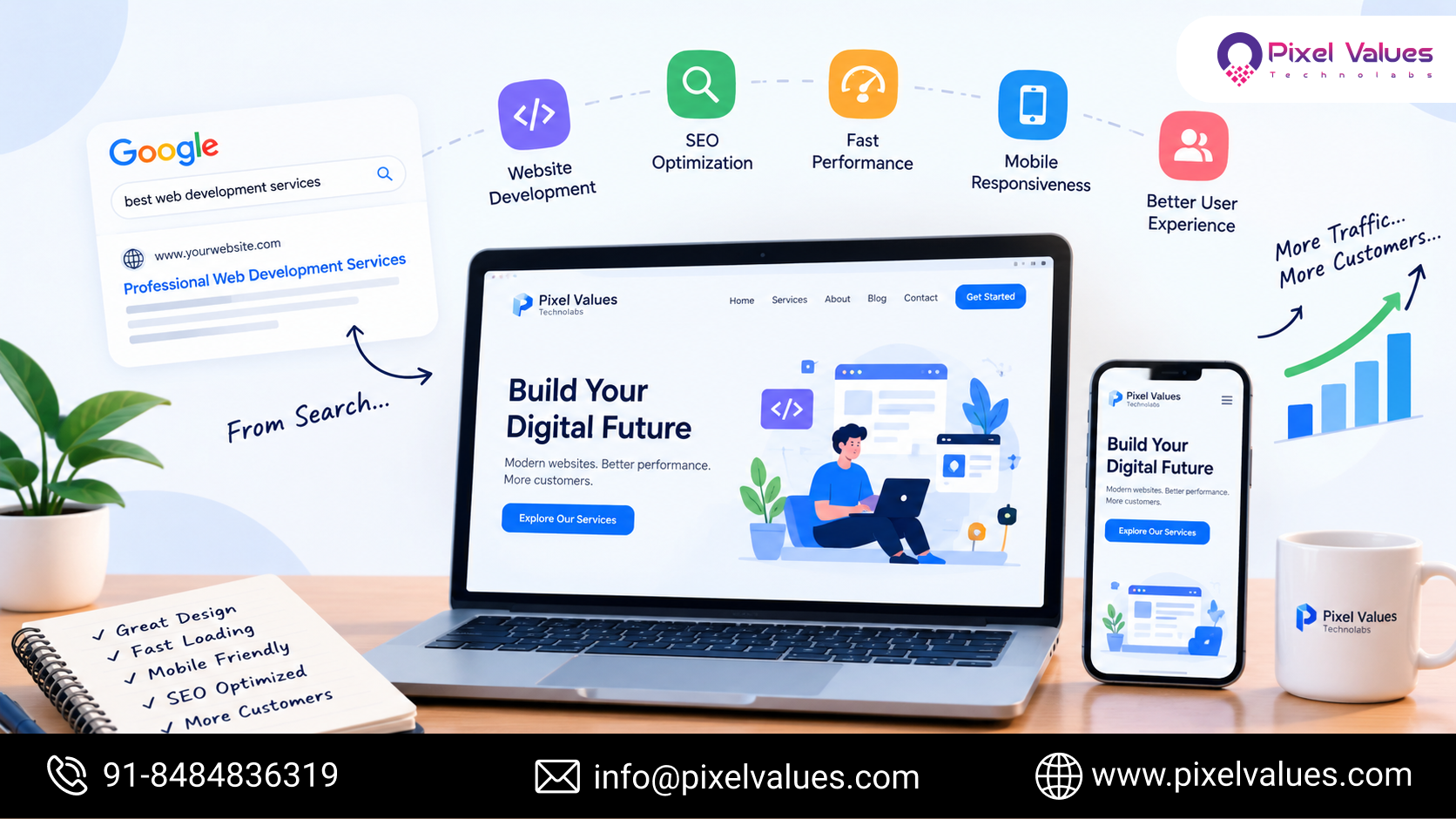
How to Build a Website That Ranks on Google and Gets More Customers in 2026 Imagine a potential customer searching Google for a service your business offers. They find your website, click on it, and wait for the page to load. But if the website is slow, the information is confusing, or the contact button is difficult to find, they may leave and visit another business. This is why having a well-designed, user-friendly website is essential for attracting and retaining potential customers. In 2026, building a successful website involves much more than creating an attractive design. Your website needs to be easy to navigate, mobile-friendly, fast-loading, and optimized for search engines. Pixel Values Technolabs helps businesses strengthen their online presence through Website Development Services that focus on performance, usability, and business goals. By combining effective website development, search engine optimization (SEO), and a positive user experience, businesses can improve their online visibility, engage visitors, and create more opportunities to convert them into customers. 1. Start with a Simple and Well-Organized Website Structure When someone visits your website, they shouldn't have to search through multiple pages to understand what you offer. A clear website structure makes it easier for visitors to find information and helps search engines understand your content. Start with essential pages such as Home, About Us, Services, Blog, and Contact Us. If your business offers multiple services, create separate pages for each major service so visitors can explore the details without feeling overwhelmed. A well-organized website creates a positive first impression and gives potential customers a clear path to the information they need. 2. Make Sure Your Website Works Perfectly on Mobile Think about how often you use your phone to search for a business, compare services, or read reviews. Your customers do the same thing every day. That's why mobile responsiveness is essential in 2026. Your website should automatically adjust to different screen sizes, whether someone visits from a smartphone, tablet, or desktop computer. Text should be easy to read, buttons should be simple to tap, and visitors shouldn't need to zoom in to understand your content. Contact forms and navigation menus should also work smoothly on smaller screens. Google primarily uses the mobile version of website content for indexing. A mobile-friendly design helps ensure that visitors can access important information and enjoy a consistent browsing experience. 3. Improve Your Website Loading Speed Nobody enjoys waiting for a website to load. When a page takes too long to open, visitors may become frustrated and leave before discovering what your business offers. You can improve performance by compressing images, removing unnecessary scripts, using reliable hosting, and optimizing your website's code. Regular performance checks can help identify issues before they affect the user experience. Google's Core Web Vitals measure important aspects of loading performance, responsiveness, and visual stability. Monitoring these metrics can help you understand where your website needs improvement. A faster website makes browsing more comfortable and helps potential customers reach the information they need without unnecessary delays. 4. Use SEO to Help Customers Find You on Google Even the best-looking website won't deliver much value if people can't find it. This is where search engine optimization comes in. SEO helps search engines understand your website and connect your pages with relevant searches. Start by thinking about what your customers might type into Google when looking for your products or services. Use relevant keywords naturally in page titles, headings, URLs, and content. Avoid repeating the same phrases unnecessarily. Instead, focus on answering real questions and explaining your services clearly. For example, a business offering PHP Development Services can publish useful content about building dynamic websites, developing custom web applications, and maintaining business platforms. Similarly, businesses interested in Laravel Development Services may need information about secure web applications, scalable systems, and efficient backend development. Technical SEO is equally important. Keep your pages accessible to search engines, fix broken links, submit an XML sitemap, and monitor your website through Google Search Console. Remember that SEO takes time and consistent effort. Useful content, a technically sound website, and a positive user experience provide a strong foundation for long-term visibility. 5. Give Visitors a Website Experience They Enjoy A website should make life easier for visitors, not more complicated. When people arrive on your site, they should quickly understand who you are, what you offer, and how you can help them. Use clear headings, short paragraphs, helpful images, and consistent design elements. Make sure your menus are easy to understand, and avoid overwhelming visitors with pop-ups or unnecessary distractions. Building trust is equally important. Include accurate contact details, clear service information, and genuine customer reviews or testimonials when available. Make sure your website is secure and provides accessible, easy-to-use forms. When visitors feel comfortable using your website, they have a better opportunity to understand your business and decide whether your services are right for them. 6. Turn Website Visitors into Real Customers Getting people to visit your website is only half the job. The next step is helping them take action. Imagine someone reading your service page and deciding they want to learn more. If they can't find your phone number, contact form, or inquiry button, you could lose a valuable opportunity. Make the next step obvious by adding clear calls to action such as “Request a Quote,” “Contact Our Team,” or “Book a Consultation.” Keep forms simple and ask only for information you genuinely need. You can also create separate pages for individual services, explain the benefits of working with your business, and answer common customer questions. Finally, track important actions such as form submissions, phone calls, and purchases. This information helps you understand which pages are working well and where improvements may be needed. 7. Choose the Right Website Development Partner Building a website that looks good, performs well, and supports business growth takes planning and technical knowledge. The right development partner can help bring these elements together. Pixel Values Technolabs provides website development services for businesses looking to
Read More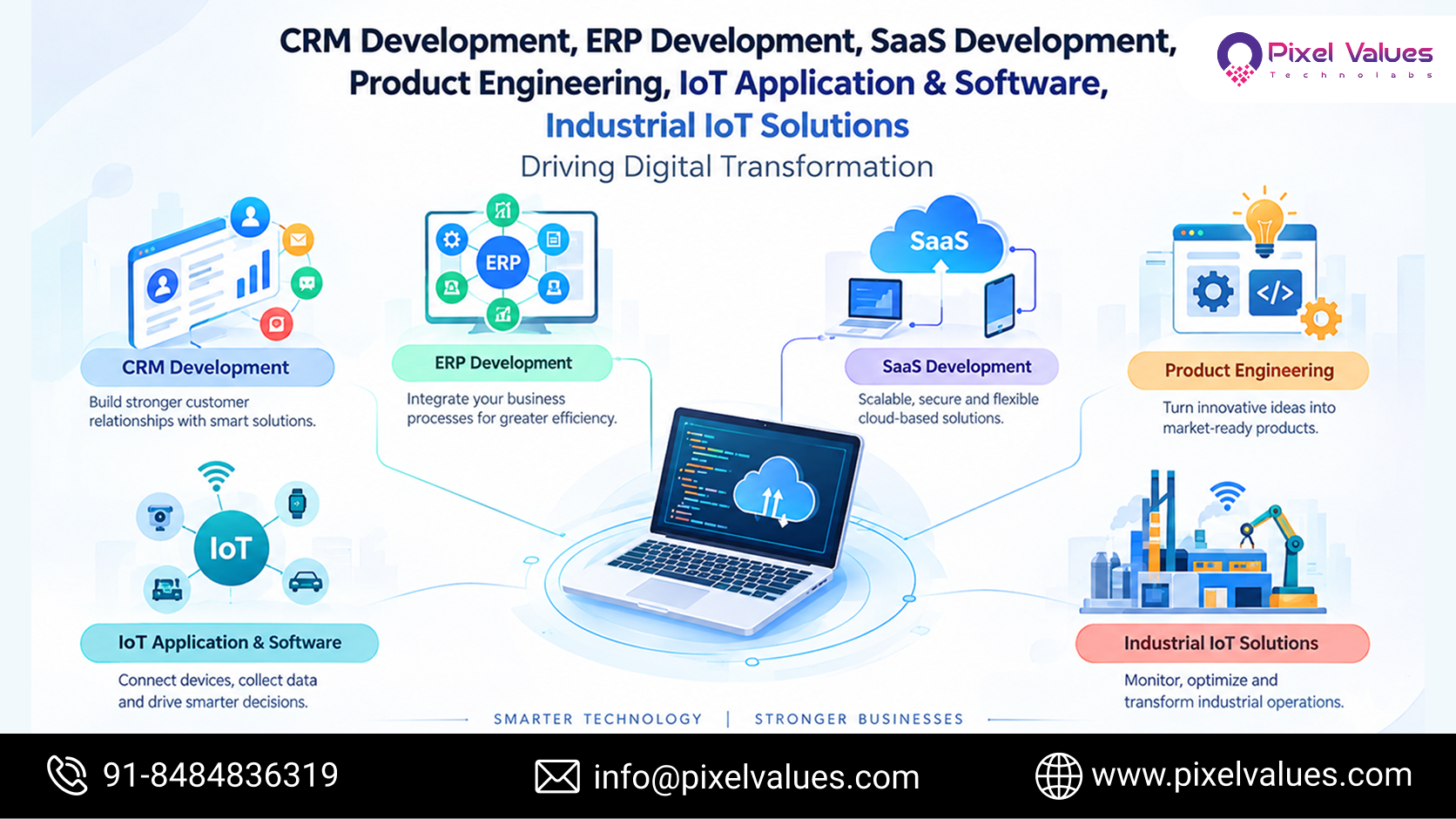
How Custom Product Development Services Help Businesses Scale and Innovate
How Custom Product Development Services Help Businesses Scale and Innovate CRM Development , ERP Development, SaaS Development, Product Engineering, IoT Application & Software, and Industrial IoT Solutions are essential technologies that help businesses improve productivity, streamline operations, and remain competitive in an increasingly digital world. Organizations across industries are adopting these solutions to manage customer relationships, optimize internal processes, develop scalable applications, and connect devices for real-time monitoring. Understanding their benefits helps businesses choose the right technology for their operational requirements and long-term goals. Understanding CRM Development Customer Relationship Management (CRM) development focuses on creating software that helps businesses manage customer information, sales activities, marketing campaigns, and customer support. A customized CRM system allows organizations to organize customer data, track interactions, monitor sales pipelines, and improve communication across teams. CRM solutions can automate repetitive tasks, generate performance reports, and provide insights into customer behavior. Businesses can use this information to strengthen relationships, improve customer satisfaction, and identify new sales opportunities. A well- designed CRM platform also supports better coordination between sales, marketing, and service departments. The Importance of ERP Development Enterprise Resource Planning (ERP) development involves building software that integrates essential business functions into one centralized system. These functions may include finance, inventory management, procurement, human resources, production, and supply chain operations. With ERP software, organizations can reduce data duplication, improve information accuracy, and gain a clearer view of business performance. Instead of managing separate systems for different departments, employees can access relevant information through a unified platform. This integration supports better planning, faster decision-making, and more efficient resource utilization. How SaaS Development Supports Business Growth Software as a Service (SaaS) development focuses on creating cloud-based applications that users can access through the internet. SaaS products typically operate through subscription models, allowing businesses to use software without managing all the underlying infrastructure themselves. Scalability is one of the major advantages of SaaS applications. Businesses can adjust their usage as requirements change, while providers can deliver updates and improvements centrally. Security, user access management, data backup, and system reliability are important considerations when developing a successful SaaS product. SaaS solutions are widely used for project management, accounting, customer service, collaboration, and business analytics. Product Engineering for Innovative Solutions Product Engineering covers the complete process of designing, developing, testing, launching, and improving digital products. It combines technical expertise, user experience design, business analysis, and quality assurance to create solutions that address specific market needs. Effective product engineering begins with understanding the target audience and defining clear product requirements. Development teams then create prototypes, test functionality, gather feedback, and refine the product. Continuous improvement helps organizations respond to changing customer expectations and emerging technologies. A structured engineering approach can improve product quality, reduce development risks, and support long-term scalability. IoT Application & Software: Connecting Devices and Data IoT Application & Software enables connected devices to collect, exchange, and process information through networks. These applications often combine sensors, communication technologies, cloud platforms, dashboards, and data analytics to provide useful insights. Businesses can use IoT solutions to monitor equipment, track assets, manage energy consumption, and automate selected processes. For example, connected sensors can report temperature changes or equipment conditions, helping teams identify potential problems before they cause significant disruption. Reliable connectivity, data privacy, device security, and compatibility are essential when designing effective IoT applications. Industrial IoT Solutions for Smarter Operations Industrial IoT Solutions apply connected technologies to manufacturing, logistics, energy, and other industrial environments. By connecting machinery, sensors, and operational systems, businesses can gain real-time visibility into production activities and equipment performance. Industrial IoT can support predictive maintenance by identifying unusual equipment behavior that may indicate a developing fault. It can also help organizations monitor production efficiency, improve quality control, reduce downtime, and optimize resource consumption. Successful implementation requires careful planning, secure network architecture, integration with existing industrial systems, and clear performance objectives. Choosing the Right Digital Development Approach Selecting suitable technologies depends on business priorities, budget, existing infrastructure, and future growth plans. CRM systems are useful for customer management, while ERP platforms integrate internal operations. SaaS development supports cloud-based products, and product engineering helps transform ideas into market-ready solutions. IoT Application & Software and Industrial IoT Solutions are valuable when connected devices and operational data can improve efficiency. These technologies can also complement one another. For example, an ERP platform may integrate production information from industrial IoT systems, while a CRM platform can connect customer service data with other business applications. Thoughtful integration creates a more connected digital environment. Conclusion CRM Development, ERP Development , SaaS Development, Product Engineering, IoT Application & Software, and Industrial IoT Solutions help organizations modernize operations, improve decision-making, and create better customer experiences. By selecting the right technologies, prioritizing security, and planning for scalability, businesses can build reliable digital capabilities that support sustainable growth. A clear strategy and continuous improvement are essential to gaining lasting value from these solutions. Author Bio: Tauseef Anwar is the CEO of Pixel Values Technolabs, The Best Mobile App Development Company In India Tauseef believes in making customer satisfaction the topmost priority and takes care of the Business Development and operations. An entrepreneur by heart, he is always ready to speak a few words or discuss the latest tech especially if it is mobile technology. Contact Information: Call us at 0712-6611379 OR 9822367795 Website: www.pixelvalues.com
Read More